Govt committed to enhance women’s health, education’, Ahsan Iqbal
National Campaign Against Hepatitis, Diabetes, and Malnutrition Launched | Government Enhances Women’s Workforce Participation Through Technological Innovations, Planning Minister
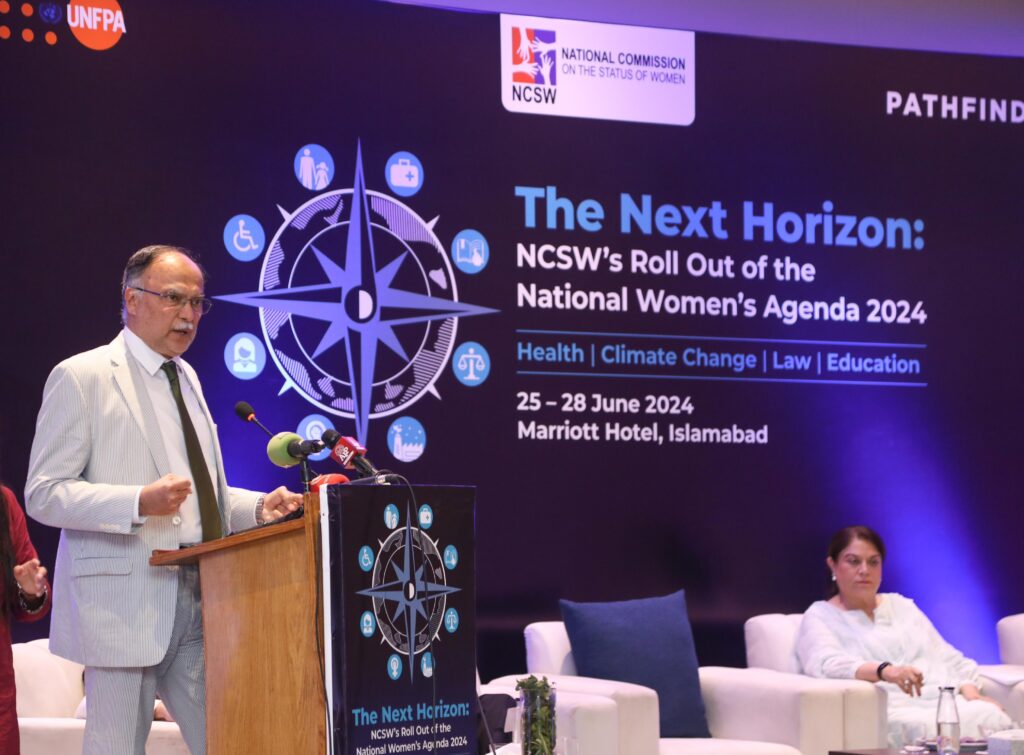
Islamabad : The Planning Minister, Prof. Ahsan Iqbal, addressed the concluding session of the National Conference on Women and Health, titled “Paving the Path to Inclusive Health Care Solutions for Women in Pakistan.” In his speech, the Minister emphasized the government’s commitment to enhancing women’s health and education as a cornerstone for national development.
Minister Iqbal highlighted that no country can achieve development without the full participation of its female population, which constitutes 50 percent of the population. He underscored the necessity of attaining a 90% literacy rate among women, as seen in rapidly developing countries in Asia over the last fifty years. The Minister pointed out that countries with less than a fifty percent participation rate of women in national development have not succeeded in sustainable growth.
Minister Ahsan Iqbal highlighted the government’s proactive measures for women’s welfare under the Public Sector Development Program (PSDP). He emphasized that significant initiatives have been introduced to ensure women’s empowerment and health.
He outlined the importance of empowering youth and women to create a future-ready workforce for the digital economy of the 21st century. The government has implemented various measures, including technological advancements that enable women to work from home, thereby enhancing their participation in the workforce.
Highlighting the detrimental impact of neglecting health issues on national competitiveness in today’s global arena, he underscored the imperative to combat these diseases effectively. To address these challenges, the government is launching significant initiatives this year under the leadership of the Prime Minister in collaboration with provincial governments. These initiatives include undertaking hepatitis with a national campaign aimed at achieving results comparable to Egypt’s success in eliminating the disease within three years.
Another initiative targets the rising prevalence of diabetes, focusing on raising awareness and promoting healthier lifestyles. The government also aims to address malnutrition among schoolchildren by enhancing nutritional facilities, alongside efforts to stabilize the population growth rate, which has begun to increase in contrast to global trends.
Minister Iqbal emphasized the inclusivity of these efforts, noting the establishment of the Gender Unit within the Ministry of Planning during the previous tenure. This unit aims to ensure that women’s health and welfare are prioritized and integrated across all development initiatives, reflecting the government’s commitment to fostering a healthier and more resilient society.
The Minister reaffirmed the government’s dedication to continuing these efforts, ensuring that women’s welfare remains a top priority in Pakistan’s development agenda.
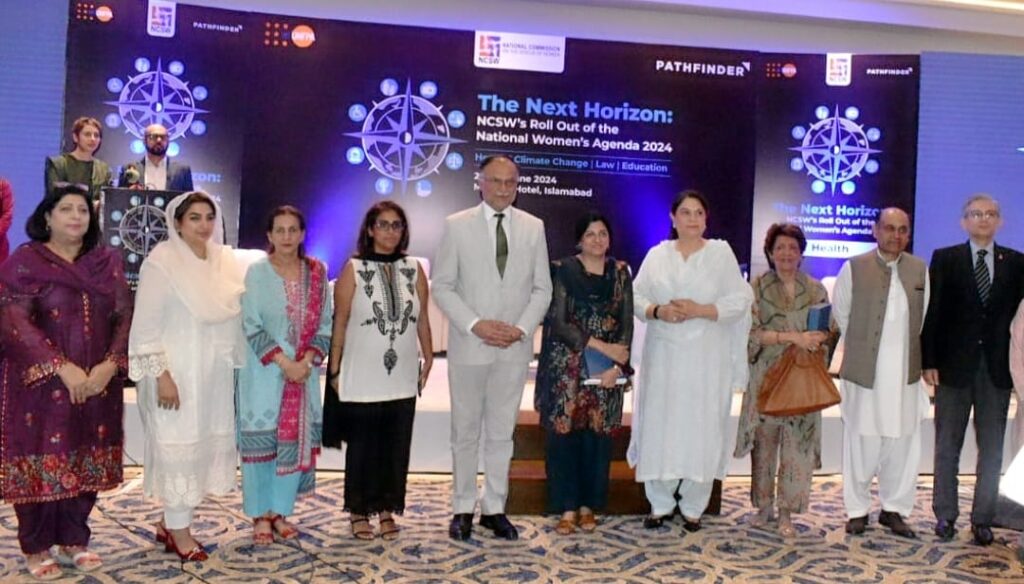
The National Commission on the Status of Women (NCSW) has launched the first phase of its transformative consultation conference series, titled ‘The Next Horizon’, aiming to create a comprehensive National Agenda for Women and Girls in Pakistan.
The series began with a conference on health ‘Inclusive Healthcare for Women: Paving the Way Forward’, organized in collaboration with UNFPA and Pathfinder. Nilofar Bakhtiar, Chairperson of NCSW, opened the session by highlighting the urgent need to address the pressing health issues facing women in Pakistan.
Mr. Waqar Ul Hassan, Special Secretary, Ministry of National Health Services Regulation and Coordination, and Lt. General (Rtd) Nigar Johar, also addressed the participants. Moreover, renowned actress and activist Nadia Jamil shared her inspiring personal journey through breast cancer.
The conference featured thematic working group sessions that delved into various aspects of women’s health. These included discussions on Sexual and Reproductive Health and Rights (SRHR), nutritional disparities, common communicable and noncommunicable diseases, and emotional and mental health.
The recommendations include: Advocate for increasing the health budget allocation to at least 10% of the development budget and 5% of GDP, non-politicized recruitment for healthcare professionals, access to mental health services at secondary and tertiary levels, inter-provincial health programs that can be monitored, improved and replicated, Enhancing coordination between women’s health departments and the Provincial Disaster Management Authority to accommodate internally displaced expecting mothers to be given proper and urgent care, prioritize and invest in digital health solutions to enhance women’s healthcare services across far flung areas, social protection, safety and security and life and health insurance schemes for primary, secondary and tertiary healthcare professionals, incentivized programs for healthcare professionals to serve in the marginalized communities across Pakistan and special nutritional programs for mother and child across all provinces.