Policy Dialogue Explores Strategies to Improve Primary Teacher Effectiveness and Reduce Learning Poverty in Pakistan
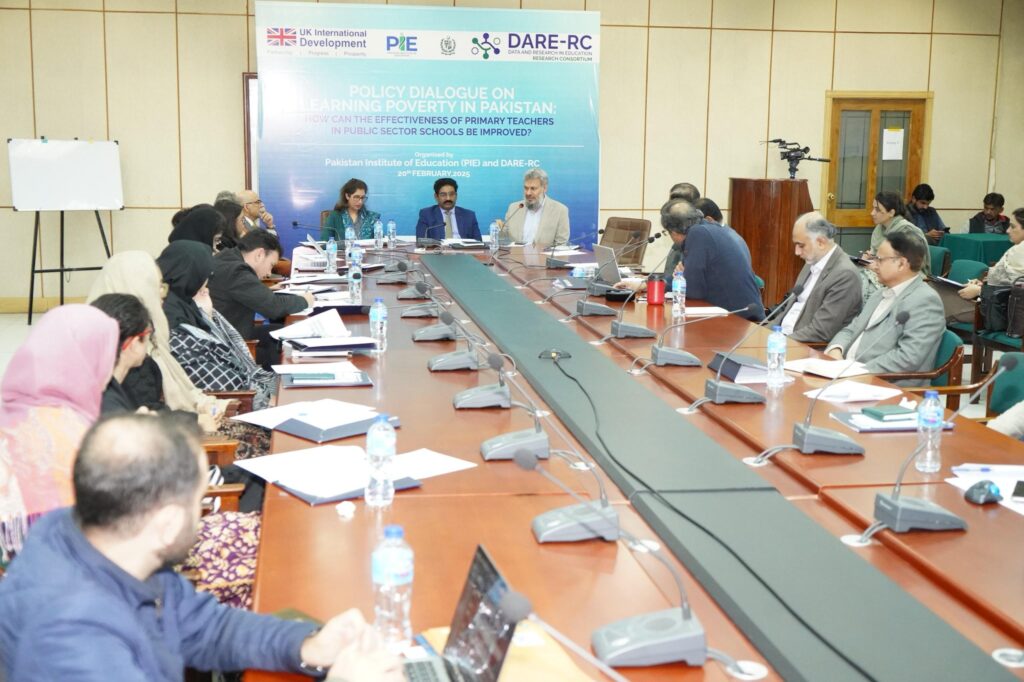
ISLAMABAD : The Pakistan Institute of Education (PIE) and the Data and Research in Education – Research Consortium (DARE-RC), a project implemented by Oxford Policy Management (OPM), jointly hosted a Policy Dialogue on “Learning Poverty in Pakistan: How Can the Effectiveness of Primary Teachers in Public Sector Schools be Improved?” at the PIE Auditorium, Islamabad.
The dialogue convened policymakers, education experts, researchers, and development partners to discuss the critical role of primary school teachers in addressing learning poverty in Pakistan. Despite increased school enrolments, a significant proportion of children fail to attain foundational literacy and numeracy skills, hindering their long-term educational progress. The discussion centred on key factors affecting teacher effectiveness, including school management practices, parental and community engagement, education policies, and teacher training and professional development.
The session opened with remarks from Dr Muhammad Shahid Soroya, Director General PIE, who emphasised the importance of fostering a culture of inquiry in the education sector. He stated, “One crucial element missing in our education system is the art of questioning. Productive discussions and debates lead to meaningful policy solutions. At PIE, we ensure that our research informs such dialogues, enabling us to provide policymakers with evidence-based recommendations for improving teacher effectiveness.”
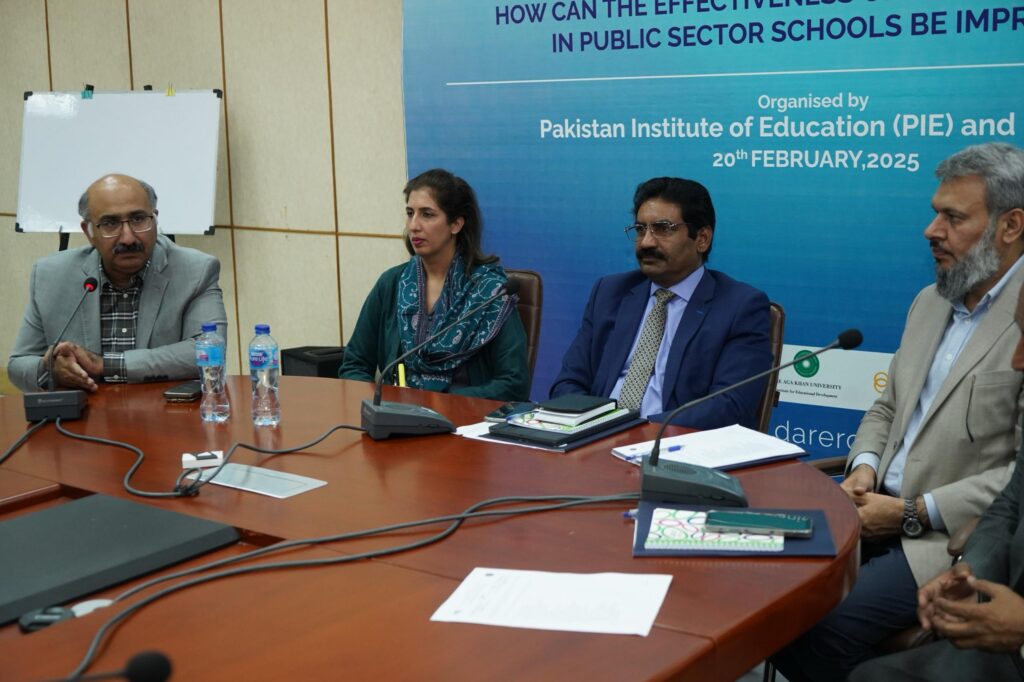
Panelists highlighted the need for reforming teacher recruitment processes to ensure that selection criteria assess essential competencies beyond exam scores. Dr Nasir Mehmood, Vice-Chancellor of AIOU, stressed, “There is no systematic mechanism for selecting the right teachers. Effective communication skills, empathy, and a passion for working with children are crucial qualities that must be considered at the recruitment stage.”
Reinforcing the need for a student-centred approach, Shahzad Sharjeel from Teach for Pakistan noted, “It is imperative that Student Learning Outcomes are explicitly defined as the primary objective of our education system. Every stakeholder, from teachers to policymakers, must work towards ensuring these outcomes are achieved.”
The policy dialogue underscored the significance of continuous professional development for teachers, structured mentorship programmes, and the integration of research-driven strategies into teaching methodologies. Participants also explored the role of community engagement in supporting teachers and creating an environment conducive to learning.
This event reflects PIE and DARE-RC’s ongoing commitment to enhancing education quality through evidence-based policy discussions. The recommendations emerging from the dialogue will contribute to shaping future policies aimed at improving teacher effectiveness, ultimately reducing learning poverty and fostering equitable educational opportunities for all children in Pakistan.