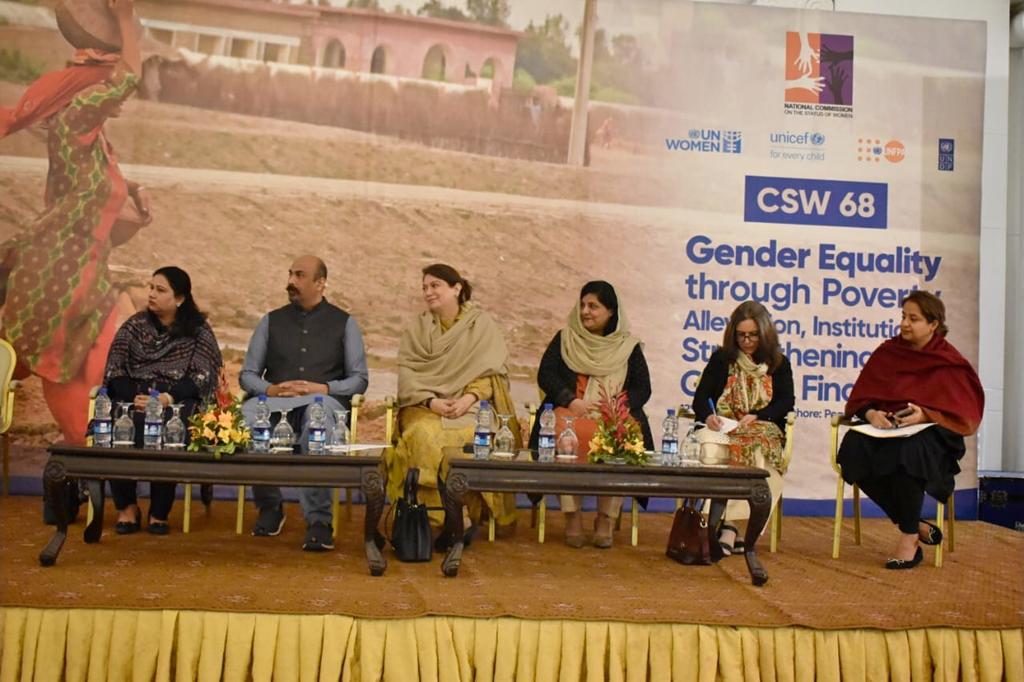
Lahore : National Commission on the Status of Women (NCSW) held a consultation program with provincial stakeholders on the preparation of National Report on “Need Analysis for Financing & Strengthening Institutions with Gender Perspective for Empowerment of Women and Girls” that will be presented by the commission in 68th Session of UN-Commission on the Status of Women. The consultation program was arranged with the help and support of consortium partners (UNFPA, UNICEF and UN Women & UNDP). Various gender experts, representatives from government departments, civil society organizations, NGOs, and media participated in the program. Governor Punjab Mr. Muhammad Baligh Ur Rehman attended the event as chief guest.
Theme of the sixty-eight session of the UN Commission on the Status of Women that will take place from the 11th to the 22nd of March 2024 is “achieving gender equality and the empowerment of all women and girls by addressing poverty and strengthening institutions and financing with a gender perspective.”
The subject consultation by NCSW aimed at preparing recommendations for the report to be presented at the 68th session of UN Commission Status of women. The speakers in consultation raised related issues with a focus on economic empowerment of women and eradication of poverty. The report will reflect a holistic picture of the women’s economic situation as well to introduce several initiatives by Government of Pakistan aiming to promote women’s economic empowerment in the country.
The participants will exchange the case studies of successful strategies, policies, and programs that have effectively empowered women and advanced gender equality in the country.
Chairperson NCSW Ms. Nilofar Bakhtiar, in her welcome remarks, said that in these pre CSW consultations countrywide we would analyze existing collaboration among government organizations, civil society, private sector and international organizations. She said that they were looking forward to creating inclusive and sustainable solutions for gender-related issues with a focus on economic empowerment and eradication of poverty as that was the core themes for CSW 68. She stressed upon adopting a comprehensive and integrated approach by which societies can work towards reducing poverty and promoting gender equality simultaneously. She added that it was essential to recognize the interconnectedness of poverty and gender issues and address them through collaborative efforts.
The Governor of Punjab Mr. Muhammad Baligh Ur Rehman while addressing as Chief Guest said that the issues of poverty and gender equality were deeply intertwined and were demanding our collective efforts for a brighter and more equitable future. He said that in Punjab we are dedicated to implementing robust policies and initiatives that would uplift the most vulnerable segments of society. Under these policies we are investing in education, job training programs, and creating sustainable economic opportunities that empower individuals and families. He further stated that it was disheartening to see that, even in the 21st century, women continue to face obstacles that hinder their full participation in various spheres of life. Therefore, we are committed to promoting gender equality as an integral part of our development strategy. This includes promoting women’s participation in the workforce, ensuring equal pay for equal work, and breaking down societal barriers that limit the potential of women. Furthermore, we will work towards strengthening support systems for victims of gender-based violence and discrimination, fostering a culture of respect and inclusion.
The participants at consultation were engaged in group work and discussions for findings and recommendations. They broadly agreed that gender equality to address poverty requires a multifaceted approach that tackles the root causes and empowers both men and women. The set of recommendations included: education and Skill Development with Equal Employment Opportunities, enforcement of anti-discriminations laws and policies in the workplace; encouragement for businesses to adopt fair hiring practices and provide equal opportunities for career advancement for both genders; support women entrepreneurs through microfinance programs, providing them with access to capital and resources.